Your Employment Brand At Work

4 "Musts" For Ensuring A Positive Employment Brand
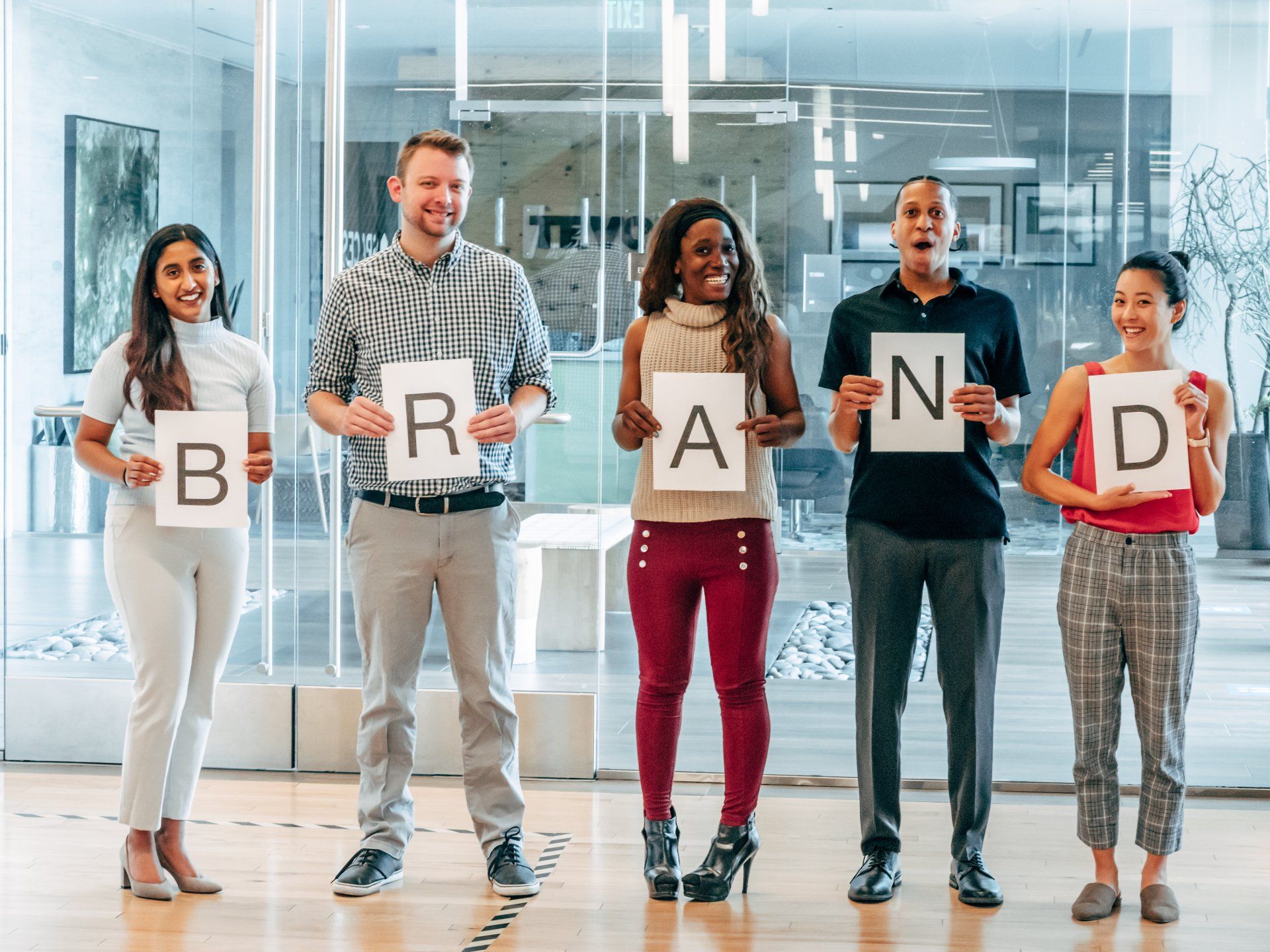
Five employees standing holding letters that collectively spell Brand.

When you think of a popular or powerful brand, what comes to your mind? Almost everywhere you look today, companies are putting their best efforts into creating and communicating their brand images and messages in a way that makes you want to do business with them.


When you think of a brand like Apple, Coca Cola or Proctor and Gamble, their marketing departments work incredibly hard to place the right thoughts into your mind and to influence you to spend your money on their products. According to Merriam Webster, the term “brand” refers to “a public image, reputation or identity conceived of as something to be marketed or promoted.”


An employment brand is not much different. It’s the reputation of your business in the community when it comes to your hiring, management and treatment of your employees. It’s the way that your organization is perceived by others as a place of employment. And it can have a substantial impact on your financials as well as your ability to attract high performing talent. 


If you think you’re too small to have a reputation as an employer, you may want to at least review the Glass Door and Indeed websites to see if any comments have been made by current or former employees. While positive comments on these sites can drive talent your direction, negative comments can serve as a warning beacon to otherwise interested candidates. 


Here are four recommendations on how to create and maintain a positive employment brand. And they don’t require a great financial investment. 


First, treat your employees right… with dignity and respect. Hard to believe that actually needs to be mentioned but you might be surprised at some of the environments that I’ve encountered over the years where we have to revisit the concept of basic human kindness. If a member of your management team is damaging your employment brand through their actions, address it. First time managers in particular, take note… people will generally perform at a much higher level when they are treated well. A bit of appreciation and/or a sincere “thank you” goes a long way. I recently heard an executive tell his management team, “Your employees are going to talk about you with their families over dinner tonight. Make sure it’s positive conversation.” 


Second, be intentional about marketing when it comes to the careers page of your website or advertisements for openings. Include (accurate) information about the work experience, the culture, the environment, the development opportunities, community involvement, etc. What is it like to work there? What is your Unique Value Proposition? Especially in light of the “great resignation”, now is the time when you must put your best foot forward in your messaging.


Third, be very intentional about developing your culture. Workplace culture refers to the environment that you create for you employees. It’s a general description of the way things are done. And its shaped in the minds of your employees every time they observe your leadership style and the decisions that you and the members of your team make. Keep your standards high, lead by example and work to surround yourself with people who are better than you are.   


Finally, show sincere interest in the development of your employees. Whether it’s in reference to internal career opportunities, external training, stretch assignments or simply a gradual mastery of their responsibilities, most employees have a desire to progress and improve over time. 


Remember… Your brand is created by the stories that your employees tell others about their experience with your company. And it’s about the perception that applicants have of your business as a place to work. When it comes to your ability to attract, engage, motivate and retain top performing employees, your employment brand is a powerful tool.


Brian Wallace • February 14, 2022
By Brian Wallace April 29, 2026
From Theory to Execution - Building a Culture That Demands Leadership If leadership excellence isn’t about knowledge, then what is it about? It’s about building an environment where leadership is required, visible, and unavoidable. Most organizations never get there. Here’s how the ones that do think differently. Step 1: Define Leadership in Behavioral Terms “Be a better leader” is meaningless. Instead, define leadership like this: “Addresses performance issues within 48 hours” “Delegates decisions with clear ownership and authority” “Drives clarity by aligning team priorities weekly” If you can’t see it, you can’t manage it. Step 2: Make Leadership Measurable What gets measured gets managed. Ask: Are decisions being pushed down or pulled up? Are leaders developing successors or creating dependency? Is accountability consistent across teams? Are new ideas being generated? If leadership isn’t measured, it becomes subjective - and subjective standards don’t scale. Step 3: Align Consequences with Expectations This is where most organizations fail. They say leadership matters, but they tolerate: avoidance of difficult conversations inconsistent accountability leaders who produce results but damage culture siloed and self-optimizing behavior You can’t have leadership excellence without consequences for non-leadership behavior . Step 4: Build Leadership into the Operating System Leadership isn’t a program. It’s how the business runs. It shows up in: how meetings are conducted how decisions are made how performance is reviewed how feedback is delivered If leadership only shows up in training sessions, it won’t stick. Step 5: Create Cultural Pressure for Leadership The strongest cultures don’t rely on top-down enforcement. They create peer-level expectations. Leaders hold each other accountable, teams expect clarity and ownership, and underperformance is addressed quickly and directly Leadership becomes the norm, rather than the exception. The Payoff When leadership becomes part of the system, execution speeds up, decision-making improves, teams take ownership, and senior leaders get out of the weeds. And the organization finally operates at the level its strategy demands. Final Thought Most companies are trying to teach leadership. The best companies build environments where leadership is the only way to succeed . That’s the shift. And once it happens, everything else gets easier.
By Brian Wallace April 29, 2026
Let’s address the uncomfortable truth: Most leaders already know what they should be doing. They just don’t do it consistently. Not because they’re incapable - but because something is working against them. What’s Really Holding Leaders Back? It’s not a lack of awareness. It’s a combination of three forces that quietly shape behavior: 1. Success Has Trained Them to Stay the Same Leaders are promoted because they deliver results. So they double down on what got them there: solving problems themselves moving quickly by making decisions solo stepping in when things go sideways The problem? Those behaviors don’t scale. But letting go of them feels risky. So they don’t. 2. Short-Term Pressure Overrides Long-Term Discipline In theory, leaders know they should: coach instead of direct develop instead of fix empower instead of control But in reality? Deadlines hit. Clients escalate. Revenue matters. So they revert to speed and control because it’s faster right now. And just like that, long-term leadership development loses to short-term execution pressure. 3. The Organization Quietly Rewards the Wrong Behavior Watch closely and you’ll see it - the leader who “jumps in and saves the day” gets praised. Or the leader who builds a self-sufficient team gets overlooked. Or perhaps the leader who avoids conflict keeps the peace and avoids backlash. Organizations say they want leadership excellence. But their reward systems often reinforce the opposite. Why This Matters More Than You Think When leaders don’t change: their teams don’t grow decision-making stays centralized innovation slows burnout increases at the top And eventually, the business hits a ceiling that no strategy can fix. The Real Work of Leadership Development If you want leaders to change, you have to change the environment around them. That means: redefining what “good leadership” looks like aligning incentives with the behaviors you want creating consequences for avoiding leadership responsibilities Because people don’t rise to expectations. They rise to what the system reinforces .
Executive team sitting around a conference table.
By Brian Wallace April 29, 2026
Most companies don’t lack leadership knowledge—they lack execution. Discover why leadership fails and what it takes to turn insight into results.